Amazon = 20% of land carbon uptake, it could disappear soon
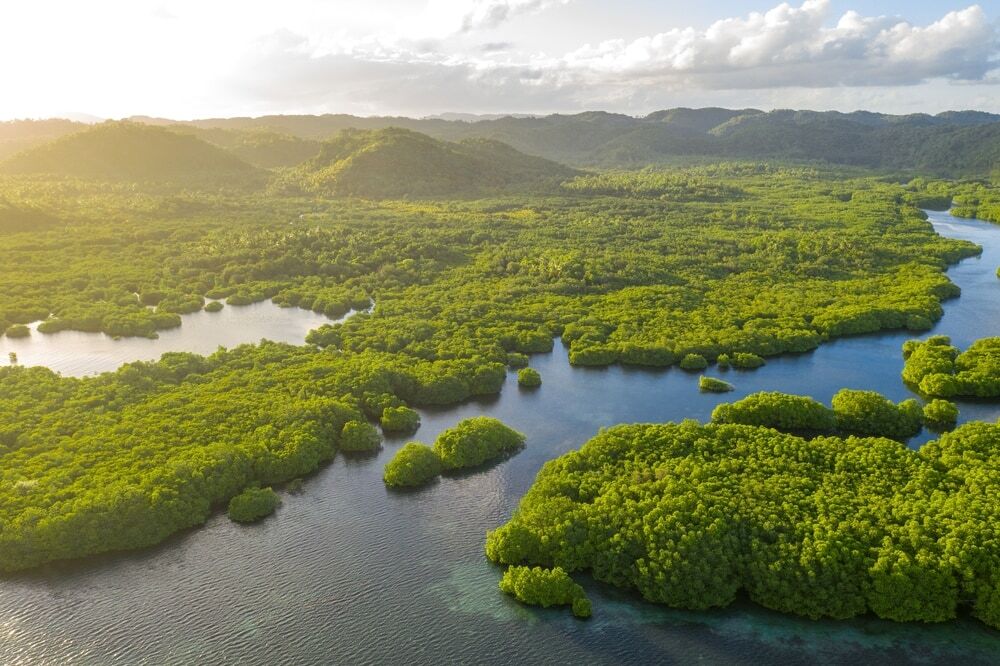
Scientific estimates are that the Amazon sequesters about 20% of the carbon on land from jungle plant use of Co2. This carbon storage value could be lost if the Amazon reaches a tipping point where deforestation causes changes in weather that shift it from a carbon sink to a carbon emitter. Many scientists fear this could happen soon. Even if we keep global warming this century to 2.7 degrees Celsius (we are now at 1.5 deg. C) ( a middle of the road scenario), the AMOC (Gulf Stream) will start to collapse in 2063 (UNFCC report in 2025). This will lead to huge droughts and a deep- freeze in winter in Europe, raise global sea levels and shift the Amazon from a jungle to a prairie. It will lead to global starvation at an epic scale due to lower crop productivity and destroy much of the biodiversity that exists today.
GCarbon Coin is tackling this problem by filling in the weak points of current efforts to stop deforestation. This requires a set of carrots that generate community interest among ranchers, farmers and businesses in parallel with sticks that make it expensive and dangerous to continue illegal logging, mining and ranching.
Carrots:
Carrots consists of a program of incentives for ranchers to improve their cattle farms by planting macauba trees to increase income and reduce soil degradation, tree planting for dry season feed (Calliandra Calothyrsus) and use of seaweed and Calliandra to reduce methane. All of these steps provide immediate and long term income to ranchers. This includes 1) temporary land leasing (when macauba trees are growing up), 2) sale of calliandra wood chips, 3) watering pond creation, 4) more cows per ha due to feed and water, 5) higher value of cattle due to environmentally friendly designation (low methane, silvopasture, high density), 6) availability of feedlots to increase meat production and value of meat (thereby increasing cattle value). These carrots are offered on the condition that ranchers agree to stop deforestation in the community, both politically through lobbying and on their own farm. We are working with GCarbon Brazil (www.gcarbonbrazil.com) on this program. They are building an ethanol plant using industrial sweet potatoes (with a yield per ha per year of 100,000 Kg) as the feedstock to produce ethanol. The refininery will be zero emission through methane capture and use in ethanol refining.
Sticks:
A discussion is ongoing with IBAMA, the enforcement arm of the Federal Ministry of Environment, to allow indigenous tribes to protect their jungle from cattle, mining or logging using more aggressive direct intervention methods. We are proposing to sponsor a set of retired Uktrainian drone operators to train indigenous guards in how to use drones to complete surveillance and data sharing tasks. This results in video evidence tied to satellite location data of illegal activities that are then submitted to IBAMA and a judge to get instant permission to intervene in illegal operations. Attack drones are then used to destroy trucks, barges or equipment in a non-lethal manner. This makes it very difficult and expensive to illegally extract logs, gold or precious metals. With cattle, the same approach can be used by dropping paintballs on the cattle so it is obvious that the cattle were on indigenous land. This then makes it very hard to sell the illegal cattle in the market. The guards will also train the indigenous tribes to defend themselves if attacked, which often happens when tribal members try to stop illegal logging, mining, setting of fires, and cattle encroachment.
Role of Carbon Credits and Gamers
A key strategy to get awareness of both the problems and solutions to deforestation of the Amazon is to get gamers involved to teach them through play. GCarbon Coin will be releasing a game in late 2026 or 2027 that will allow gamers to take sides in a "Jungle War" that mirrors the real-life drama detailed above. Players will form teams and take on roles as either protectors or plunderers of the jungle (see game mechanics section for details).
The link to the Amazon protection program is that gamers will play a real role in outreach to the community, political pressure on local politicians, support to indigenous tribes and willingness to buy sustainable products such as macauba oil, chocolate and low greenhouse gas beef. There are over 2 billion people in the world that are "gamers" so capturing the interest of just of a few percentage points results in millions of players and a strong political and market force. The actual game itself also has the option to buy virtual equipment and weapons, plant virtual trees and other steps. The funds from these optional enhancements to the game will provide real funding for the protection program and local community carrots. In exchange, players will earn points from these purchases and from winning games that will result in the ability to purchase GCarbon Coins that have real carbon credit values from embedding carbon credits from jungle protection and tree planting.
50% of Brazil ranches @ 400 trees/ha (6 MT/ha) = 502 mil. MT oil
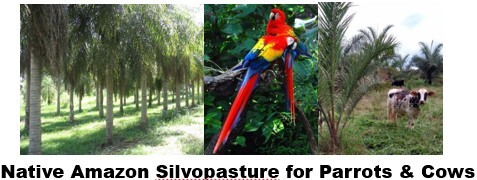
Planting 400 native Macauba trees on only half of the existing cattle ranches in Brazil (83 million ha) would produce 502 million MT of oil at 6 tons of oil per ha. This is more than 2 times greater than the total consumption of edible oils and fats globally (228 million MT) in 2024-25. At 6 tons/ha (estimated yield already reached in field trials), yield per ha is 10 times soy and greater than average of palm oil. Since cows can continue to graze under macauba trees due to the light foliage (unlike palm oil trees), there is no need to displace cattle, which can be produced at even higher levels on the same land. The tree is native to all of Latin America and provides habitat for macaw parrots, many birds, provides wildlife corridors and is adapted to the Amazon edge climate. GCarbon Coin is working with Vitaminoleic on a process to produce olive oil equivalent edible oil from macauba oil. This results in about 50% chemically contaminated saturated fat. But the value of this oil is 3-5 times higher than palm oil. This waste can easily be turned into Sustainable Aviation Fuel (SAF) using a HEFA process (same system as current petro-refineries). The total consumption of jet fuel in 2024-25 was about 300 million metric tons. So if half of cattle grazing land was converted to macauba and cattle and half of the oil was a waste fat, it would provide 80% of total SAF demand at the lowest capital and feedstock cost of any other option. Aviation accounts for 2.5% of Co2 emissions globally and with contrail impacts in the upper atmosphere this impact is most likely 4-5% of global climate impact. Carbon sequestration from planting macauba trees can
MicroLending to Help Locals Share in Green Economy
AI might use 9% of US electricity in 2028, by 2035 it could be 18%
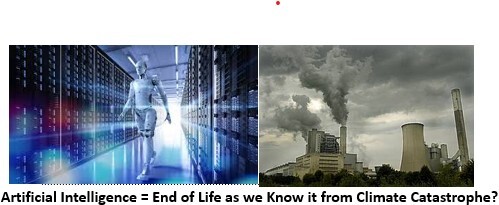
While AI Is very helpful in improving searches and human and business efficiency, it comes at a huge energy and climate cost. Projections are 9% electricity load growth in USA just from AI by 2028. Data center power demand could rise for 176 TWh in 2023 to between 325 to 580 TWh by 2028 (6.7% to 12%). Bloomberg projects that is could reach 106 GW by 2035 or a 1.6 to 2.7 times increase vs. 2024 use of 40 GW. This is against total US electricity use of 1240 GW (9%). This 2035 estimate is low since the median of growth is 9% by 2028 and flatline growth is not likely. If data center use doubles from 2028 to 2035, the AI sector will consume about half of commercial energy use by 2035 or 80% of total industrial electricity use in 2025.
AI is both a blessing and a curse. It gives people and companies many new tools to get work done and improve efficiency. At the same time, it has quickly snatched up all available electricity and is forcing growth of many questionable power projects that will heavily impact climate change emissions for the next 30-50 years. AI is expected to increase demand for electricity by 8% by 2028-2030 and could be 2-3 times this amount by 2035. This will increase electric rates, stress the grid, lead to blackouts and cause water shortages. The answer lies in use of solar and storage. This is limited now in the USA because of expiring tax credits, import duties and elimination of access to public lands.
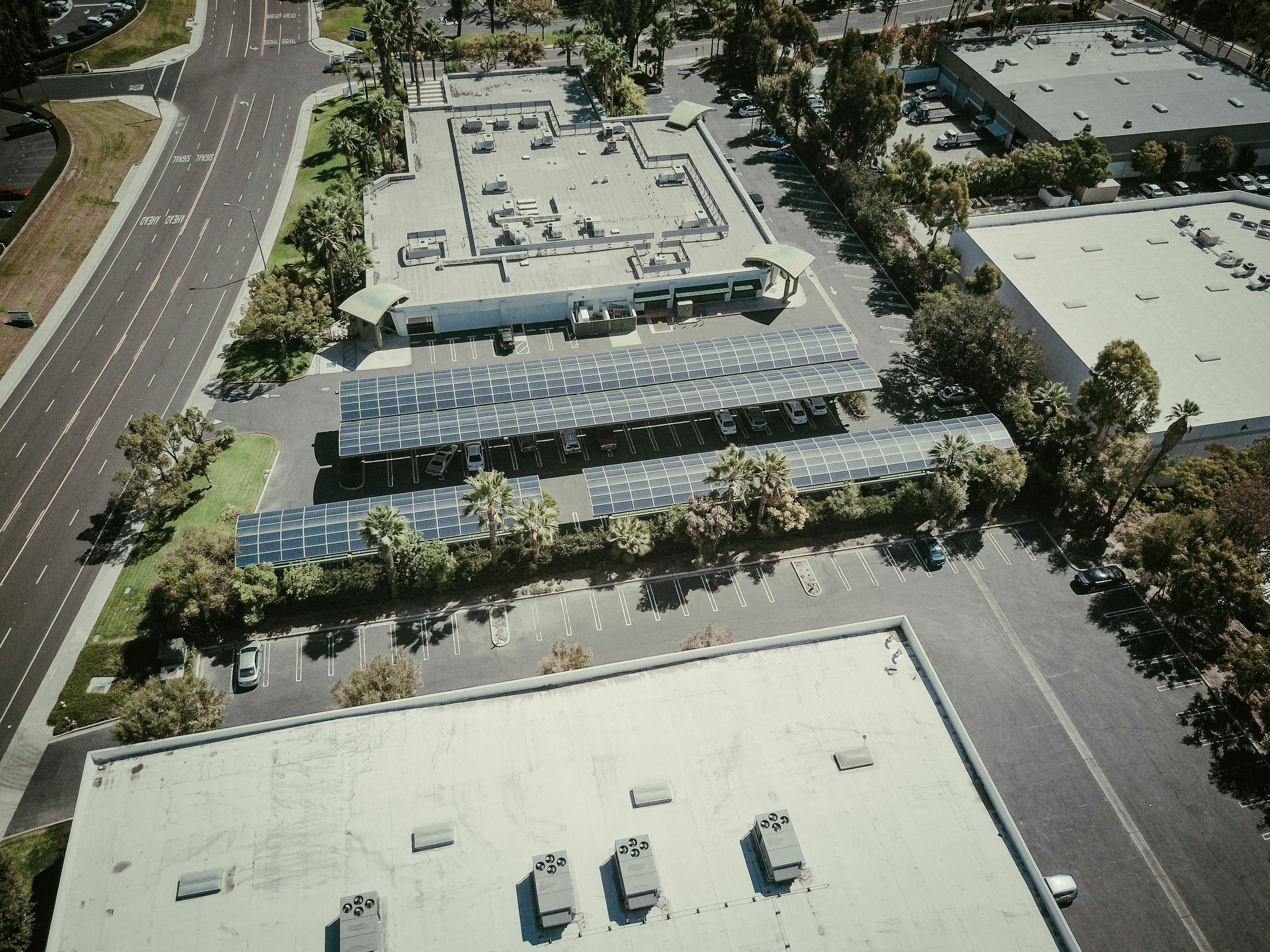
The solution lies in Mexico. The largest project GCarbon Coin is working on is an effort to provide a large block of solar electricity and hydro/battery storage to AI project developers (Google, Meta, Microsoft & their infrastructure builders) at the CA/AZ & Mexico border. Two sites have been identified with deals worked out to obtain land and connections in government to get permits. The sites are right on the US border near Calexico, CA on one side and San Luis, AZ on the East side. The plan involves developing at least 500 MW of solar (& up to 1 GW) and coupling it with a pumped storage hydro project at the top of LaRumarosa. This steep hill rises over 1000 meters above the desert and provides up to 250 MW of electric capacity that can be provided all evening long. The right of way is already established from a 2 cubic meter water line running from Colorado River to Tijuana.
The solar project involves offering solar electricity to the water company that now uses natural gas electricity and using excess daytime solar to pump water to a large set of tanks or a reservoir at the top of the hill. This water will then flow downhill in a sealed system to a pelton wheel hydro generator to provide evening electricity. Additional solar capacity will also be built at the very large desert site to provide electricity during daytime solar hours direct to an AI Data Center that would be built at the edge of Calexico on private land in the deset at the border. This will lead to minimal transmission requirements (1 mile or less) and no grid impacts.
The solar system will use almost no water for cleaning of solar panels by using new robotic systems that use non-water-based cleaning. The main water use is by the AI Data Center for cooling systems. To offset this water use, we will offer to Imperial Valley farmers financing for using new soil additives to reduce water use by up to five times. Since Imperial Valley is using about 20% of California's Colorado River water supply yearly (3.1 million acre feet), getting a 3-4% improvement in water efficiency would free up a lot more water than used by AI systems.
The cost of the electricity on an LCOE basis is under 5 cents per kWh. This is much lower than any other option including natural gas, nuclear, coal & geothermal. It has almost no climate change emissions and no hazardous wastes to dispose of or create potential terrorist security issues. To generate community support, we are also asking Imperial Irrigation District to consider an expansion of their community solar project so more low income residents can enjoy much cheaper solar & hydro electricity.